Pay in installments of $7.02 with
 ,
 and

Shipping Estimate
USA
- USA
- CAN
- USA
- CAN
Ships within 48 hours · Estimated delivery Nov 11 - Nov 16
 Promo Codes Available:
For Your Every Summer RSVP, with Code: SUMMER15
Description
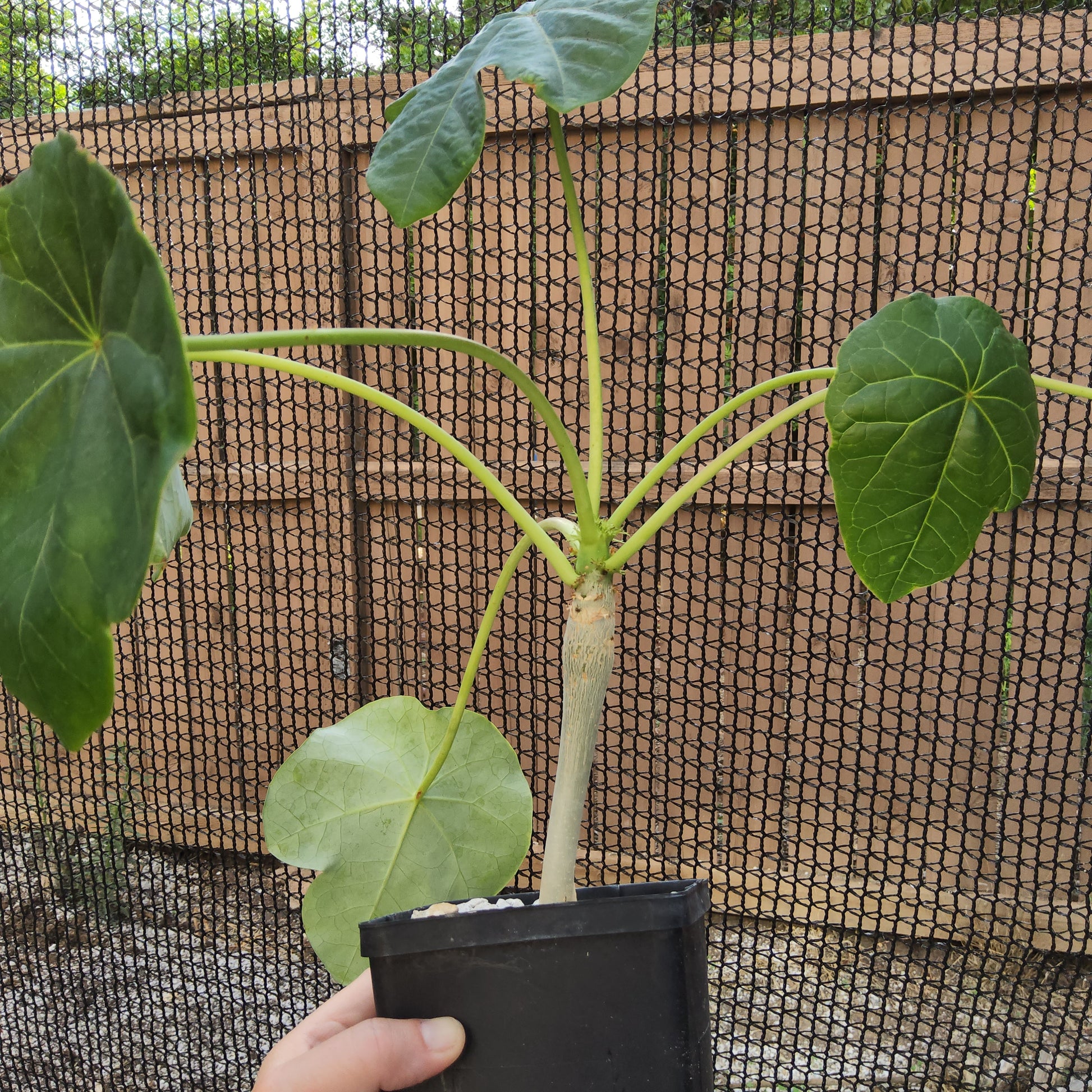
jatropha succulent Jatropha podagrica Live Succulent Growing in 6 InchJatropha podagrica, commonly known as the "Buddha Belly Plant" or "Gout Plant," is a unique and attractive succulent shrub belonging to the Euphorbiaceae family. This plant is native to Central America but is now grown as an ornamental plant in various regions around the world. Here's some information about Jatropha podagrica: The most distinctive feature of Jatropha podagrica is its swollen, bulbous stem, which gives the plant its common names
Jatropha podagrica, commonly known as the "Buddha Belly Plant" or "Gout Plant," is a unique and attractive succulent shrub belonging to the Euphorbiaceae family. This plant is native to Central America but is now grown as an ornamental plant in various regions around the world. Here's some information about Jatropha podagrica:
The most distinctive feature of Jatropha podagrica is its swollen, bulbous stem, which gives the plant its common names ("Buddha Belly" and "Gout Plant"). The stem can grow to resemble a plump, round belly, making it a conversation piece in gardens and indoor collections.
The plant has attractive, palmately lobed leaves that are typically bright green. The leaves grow on long, arching stems.
In late summer and fall, Jatropha podagrica produces clusters of small, star-shaped, bright red or coral flowers that are highly attractive to pollinators like bees and butterflies.
This plant thrives in full sun to partial shade. It should receive at least 4-6 hours of direct sunlight daily to maintain its compact form and encourage flowering.
Pruning is not usually necessary unless you want to control the plant's size or shape. You can trim back leggy growth or dead stems if needed.
Please note that Jatropha podagrica contains toxic compounds, especially in its seeds, so it should be kept out of reach of children and pets, and you should exercise caution when handling it.
This is for one plant similar to the one shown growing in a 6" inch container shipped bare root. All of our plants are grown in the beautiful Temecula Valley in sunny Southern California, and we ship within the United States. Shipping is done Monday thru Friday. Heat packs are available at $3 each and they add a half pound to shipping weight.
Any questions please ask.
#prsucculents
Shipping Notes
- Free Standard Shipping on $100+ Orders to the USA.
- Except Preorder products are shipped in 48 hours.
- Delivery to the USA:
- Standard Shipping : 3-10 business days
- If time is of the essence, please consider selecting expedited delivery for faster service.
Exchange/Return Notes
- We offer a 30-day return/exchange service after receiving.
- Final sale items are not eligible for returns or exchanges.
- To process your return/exchange, please contact us at [email protected]
- Please click here for more details>>> Return & Exchange Policy
4.9 ★★★★★
Based on 28 reviews
Sort
Product Reviews
★★★★★ 4
These Ones Last - Great for Small-Medium Dogs
I really want to give 5 stars but after a week, 3 of 5 squeak no more. Regardless, more of a donut shape and great for small-medium jaws. Safe to throw around the house and the soft latex easily handles bite after bite without falling apart like other tennis-ball like dog toys. These ones last and are good for hours of fun.
WAS THIS REVIEW HELPFUL?YesReportShare
Reviewed in the United States on May 3, 2025
★★★★★ 5
Pelotitas de juguete
Muy bonita y mi perrita le encanto
WAS THIS REVIEW HELPFUL?YesReportShare
Reviewed in the United States on May 18, 2026
★★★★★ 5
They KNOW that latex smell and they are hard when you first get them!
My dogs love these! I just noticed I bought them 18 TIMES! 😧 I know it's the laytex smell and they try so hard to get that squeaker out! I'd yell "new toys" and throw 3 in different directions! I know they are expensive but my dogs and I have SO much fun 😊🐾🐾
WAS THIS REVIEW HELPFUL?YesReportShare
Reviewed in the United States on March 24, 2026
★★★★★ 5
My dog love it!
My dog's favorite toy, durable even with my dog trying to destroy it. not too noisy.
WAS THIS REVIEW HELPFUL?YesReportShare
Reviewed in the United States on October 6, 2025
★★★★★ 5
Our German Sheppard loves these
Size: Medium
These cost a bit more than tennis balls, but they are so much nicer and longer lasting. For starters, they stay cleaner than tennis balls because they’re smooth rubber. Dirt won’t build up on them and if anything does stick, like grass or soil, it falls off once the dog slobber dries. They’re also thick, so they don’t fall apart or blow out like a normal tennis ball does in our dog’s jaws after 30 seconds. Our GS chomps on these like crazy and the only damage they’ve suffered is a crack that developed from the edge of the hole, but the crack is growing very slowly and none of these balls have totally failed yet. The balls do whistle when thrown ant high speed and that may help a dog track and locate it, but I’m not sure. Our neighbors hear the whistling too so it’s far from silent. Lastly the orange ball is easy to locate out in our yard, but the dark blue practically disappears.
WAS THIS REVIEW HELPFUL?YesReportShare
Reviewed in the United States on April 6, 2025